Child Social Difficulties in Scottsdale: When Patterns Need Help

Child Social Difficulties in Scottsdale: When Patterns Need Help
When your child comes home upset about being left out, argues with classmates, or avoids group activities, it can be hard to know whether it is a temporary rough patch or a sign they need more support. Child social difficulties in Scottsdale can look very different from one child to the next, and they do not automatically point to a diagnosis.
Some children need more time to warm up socially. Others may be coping with bullying, a school transition, anxiety, attention challenges, developmental differences, or a recent change in mood. Looking at the pattern, including where it happens, how long it has lasted, and how much it affects your child’s daily life, can help you decide what to do next.
What Child Social Difficulties Can Look Like at Home and School
Social struggles are not limited to having few friends. They may show up as loneliness, conflict, avoidance, intense reactions, or difficulty joining in with peers.
Parents often notice one or more of these patterns:
- Your child says no one likes them or that they have nobody to sit with at lunch.
- They want friends but do not know how to enter a conversation or activity.
- They regularly misunderstand jokes, teasing, tone of voice, or personal space.
- Small disagreements quickly become arguments, tears, anger, or physical conflict.
- They avoid recess, group work, parties, sports, clubs, or school events.
- They become exhausted, irritable, or tearful after managing social demands all day.
- A teenager withdraws from friends, stops answering messages, or seems suddenly disconnected.
- Their social stress begins affecting attendance, grades, sleep, appetite, or family life.
A child can be quiet and still have meaningful relationships. The concern is not whether your son or daughter is popular. It is whether they feel persistently distressed, isolated, confused, unsafe, or unable to participate in age-appropriate parts of life because social situations feel too difficult.
Why Social Connection Deserves Attention
Feeling connected to supportive peers and adults matters for a child’s well-being, but parents do not need to panic over every difficult school day. The goal is to listen closely and respond to ongoing patterns with curiosity rather than shame.
According to the CDC, 49% of U.S. adolescents ages 12 to 17 reported receiving peer support a lot of the time in data collected from 2021 through 2023. That means many young people may not consistently feel supported by peers, even when their social lives appear fine from the outside.
The American Academy of Pediatrics also notes that peer conflict and feeling rejected happen to many school-age children. Parents can make a meaningful difference by validating the hurt, learning what is happening, and working with the school when a pattern continues. HealthyChildren.org recommends asking teachers and school staff for observations, especially during less structured parts of the day such as lunch and recess.
What May Be Contributing to Your Child’s Social Struggles?
The same outward behavior can have several possible causes. A child who avoids classmates may be shy, worried about being judged, overwhelmed by noise, grieving a friendship loss, struggling to read social cues, or responding to bullying.
Anxiety Can Make Connection Feel Risky
A child with significant worry may want friends but avoid speaking up because they fear embarrassment, rejection, or getting something wrong. They may appear aloof or uninterested when they are actually anxious about joining in.
Physical complaints before school, repeated reassurance-seeking, perfectionism, panic symptoms, or avoiding activities they once enjoyed may suggest that anxiety deserves closer attention. Learn more about anxiety and stress disorders in children and teens.
ADHD Can Affect Friendships and Conflict
Attention difficulties can affect more than homework. Some children may interrupt, change topics quickly, act before thinking, miss details in a conversation, have trouble waiting their turn, or react strongly when frustrated.
These behaviors do not mean your child is trying to be disruptive or unkind. Still, peers may misread them, and repeated misunderstandings can affect confidence. A thorough evaluation can help clarify whether ADHD and attention difficulties may be part of the picture.
Autism Spectrum Differences or Social Communication Needs
Some children have trouble understanding unspoken social rules, facial expressions, sarcasm, flexible back-and-forth conversation, or how to shift their behavior from one setting to another. Sensory sensitivities and a strong preference for predictable routines can also make crowded or fast-moving social situations more demanding.
Friendship difficulties alone do not mean a child has autism. An evaluation looks at a broader developmental history and pattern of communication, interests, behaviors, strengths, and daily functioning. Families can learn more about autism spectrum disorder support.
Mood Changes, Bullying, and Emotional Distress
A child who used to enjoy peers but suddenly pulls away may be experiencing bullying, sadness, a friendship breakup, depression, family stress, or another emotional challenge. In children and teens, distress may show up as irritability, anger, frequent crying, sleep changes, low motivation, or complaints of feeling sick.
Take a sudden or major social change seriously, especially when it occurs with hopeless statements, self-harm concerns, school refusal, substance use, or a sharp decline in functioning. If your child talks about wanting to die or hurt themselves, call or text 988 in the United States, seek emergency support, or call 911 if there is immediate danger.
Look for Patterns Across Settings, Not Just One Bad Day
A useful next step is to identify when social difficulties happen most often. Knowing the setting can reveal practical supports and help a clinician understand what may be contributing.
For example, a child who does well with one close friend but struggles in a large cafeteria may be overwhelmed by unstructured groups. A teen who is relaxed at home but becomes distressed before school may be dealing with peer conflict, academic pressure, social anxiety, or something else connected to school. A child who has repeated disagreements in every setting may need help with emotional regulation, communication, impulse control, or problem-solving.
For Scottsdale families, it can be helpful to ask teachers, counselors, or other staff for concrete observations rather than a general impression. If your child attends a Scottsdale Unified School District school, you might ask what happens during lunch, recess, transitions, group projects, bus rides, and extracurricular activities. Schools can share valuable observations, but they do not need to diagnose the cause for the conversation to be useful.

Practical Ways We Can Support a Child Who Is Struggling Socially
Small, specific steps are usually more helpful than telling a child to “just be more confident.” We want to reduce shame while giving them opportunities to build skills and feel understood.
Start With Gentle, Specific Questions
Instead of asking, “Why don’t you have friends?” try questions that make it easier to share details:
- “What was the hardest part of lunch today?”
- “Was there anyone you felt comfortable around?”
- “What happened right before you got upset?”
- “Did you want to join in but were not sure how?”
- “Would you like help thinking through what to say next time?”
Listen before offering solutions. A child who feels believed is more likely to keep talking.
Create One Manageable Social Opportunity
Large parties and busy groups can be overwhelming. A brief, structured activity with one compatible peer may feel more manageable, such as drawing, a game, biking, baking, robotics, music, or a shared interest.
Keep the first gathering short and choose an activity with a clear beginning and end. The goal is not to force a friendship. It is to help your child experience a social setting that feels possible.
Practice Real-Life Moments at Home
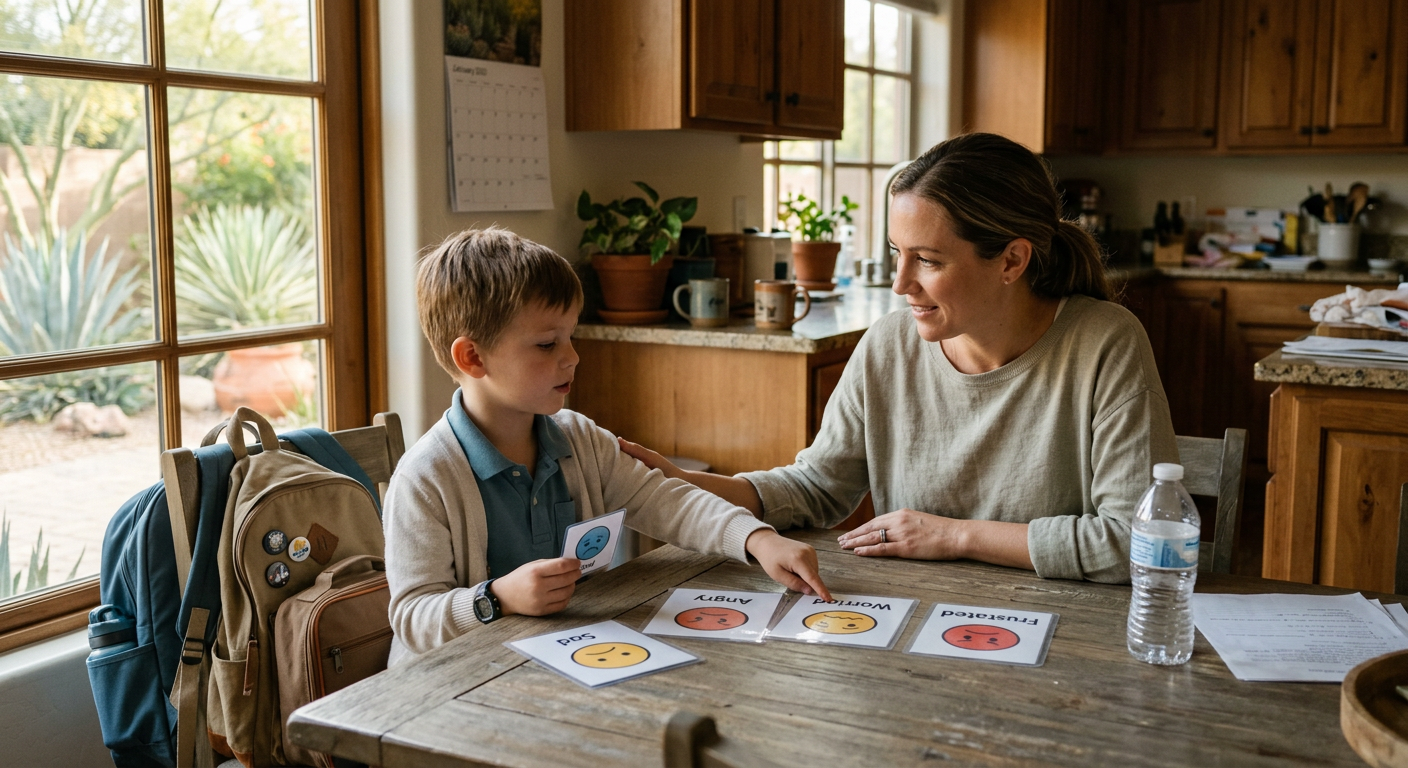
Role-play can make broad advice more useful. Practice how to ask to join a game, how to respond to a joke that feels hurtful, how to take a break before reacting, or how to handle a “no” without assuming everyone dislikes them.
Praise effort and self-awareness, not just social outcomes. “You noticed you were getting frustrated and stepped away” is more useful than “You need to be nicer.”
Address Conflict Without Labeling Your Child
Avoid labels such as “awkward,” “dramatic,” “too sensitive,” or “bad with people.” Describe the situation and skill instead: “It looked hard to tell when the conversation changed,” or “You seemed disappointed when the game did not go your way.”
When big reactions, defiance, or frequent conflict are affecting relationships, support for behavioral and emotional challenges may help families better understand the underlying pattern.
When Is a Psychiatric Evaluation Appropriate?
An evaluation may be appropriate when social difficulties are persistent, cause significant distress, interfere with school or family life, or occur alongside emotional, behavioral, academic, or developmental concerns. It can help families move beyond guesswork.
Consider seeking professional support when your child:
- Has been isolated, rejected, or involved in repeated peer conflict for several months.
- Is avoiding school, activities, or situations they once managed.
- Has intense worry, panic, sadness, irritability, emotional outbursts, or frequent physical complaints.
- Is being bullied or may be bullying others.
- Has trouble with attention, organization, impulsivity, sensory sensitivities, or communication across settings.
- Shows a sudden change in friendships, mood, sleep, appetite, grades, or daily functioning.
At Holistic Psychiatry Scottsdale, Dr. Fariba Pfitzner provides child and adolescent psychiatric evaluation with attention to the full picture, including development, school experiences, family observations, emotional health, medical factors, strengths, and other relevant supports. A personalized evaluation can help determine what may be affecting your child and what next steps fit your family.
Questions Parents Ask About Social Difficulties
Is it normal for my child to struggle socially sometimes?
Yes. Many children go through temporary social challenges after a move, school transition, disagreement, or developmental change. It may be time for more support when the pattern lasts, causes distress, or begins affecting school, mood, or family life.
Does having no friends mean my child has autism?
No. Friendship problems can relate to many factors, including shyness, anxiety, bullying, ADHD, language differences, depression, or a mismatch with a peer group. Autism assessment considers a broader developmental pattern, not one symptom alone.
Can anxiety make my child seem unfriendly or withdrawn?
Yes. A worried child may appear quiet, avoidant, or distant because they fear rejection or embarrassment. An evaluation can help distinguish anxiety from other possible contributors.
Should I contact my child’s teacher about friendship concerns?
Yes, especially if the problem is recurring. Ask for specific observations about recess, lunch, group work, transitions, peer conflict, and the situations where your child seems most comfortable.
What if my teenager says they do not care about friends?
Some teens genuinely prefer a small social circle or more independent time. Pay closer attention if this is a sudden change or if it comes with sadness, irritability, school avoidance, poor sleep, falling grades, or loss of interest in activities.
Can ADHD cause a child to lose friends?
It can contribute for some children. Interrupting, impulsivity, missed social cues, difficulty regulating frustration, and trouble following group conversations may affect relationships, but these behaviors can also have other explanations.
How long should I wait before getting help?
There is no exact timeline for every family. Consider an evaluation sooner when the problem is worsening, affecting daily functioning, causing persistent emotional pain, or occurring alongside other concerns such as anxiety, mood changes, school refusal, or self-harm thoughts.
A Clearer Path Forward for Scottsdale Families
Social confidence is not about making every child outgoing or popular. It is about helping your child feel safer, more understood, and more capable of connecting in ways that fit who they are.
If social difficulties keep repeating, it is reasonable to seek support rather than waiting for your child to “grow out of it.” Understanding the pattern can help protect self-esteem, reduce conflict, and guide practical support at home, school, and in treatment when appropriate.
Speak With a Child and Adolescent Psychiatrist in Scottsdale
If your child or teenager is struggling with friendships, peer conflict, school participation, attention, anxiety, mood, behavior, or emotional challenges, you do not have to determine the cause on your own. Dr. Fariba Pfitzner provides family-centered psychiatric evaluation and personalized treatment planning for families in Scottsdale, Arizona and the greater Phoenix area.
Schedule an appointment with Holistic Psychiatry Scottsdale to discuss your concerns and explore the next appropriate step for your child.
About Holistic Psychiatry Scottsdale
Holistic Psychiatry Scottsdale, led by Dr. Fariba Pfitzner, provides personalized psychiatric care for children, adolescents, teenagers, and young adults in Scottsdale, Arizona.
Dr. Pfitzner works with families experiencing concerns involving ADHD and attention difficulties, anxiety and stress disorders, depression and mood disorders, Autism Spectrum Disorder, behavioral and emotional challenges, and school and social difficulties.
Care is individualized to the needs of each child and family, with the goal of understanding the factors affecting emotional health, behavior, relationships, development, and school performance.
Areas We Help With
- ADHD & Attention Difficulties
- Anxiety & Stress Disorders
- Depression & Mood Disorders
- Autism Spectrum Disorder
- Behavioral & Emotional Challenges
- School & Social Difficulties
Concerned about your child or teenager? Contact Holistic Psychiatry Scottsdale to schedule an appointment with Dr. Fariba Pfitzner.