Teenager Refusing School: Causes, Signs, and Parent Next Steps

Teenager Refusing School: Causes, Signs, and Parent Next Steps
When a teenager refuses school, it is usually a signal that something feels difficult, unsafe, overwhelming, or unmanageable, not simply a matter of laziness or defiance. Your teen may be dealing with anxiety, bullying, depression, academic pressure, social struggles, sleep problems, attention difficulties, or another concern that deserves a closer look.
A few difficult mornings do not automatically mean there is a psychiatric condition. But when a teen regularly cries, panics, becomes physically ill, shuts down, argues intensely, or cannot get out the door, it is important to understand what may be driving the pattern. The goal is not to win a morning battle. It is to help your teenager feel heard while building a realistic plan to reconnect with school.
What Does It Mean When a Teenager Refuses School?
School refusal is a pattern of avoiding school because attending feels emotionally or physically distressing. It is different from ordinary reluctance, occasional skipping, or wanting a mental health day after a stressful week.
The American Academy of Child and Adolescent Psychiatry explains that school refusal is not itself a diagnosis. It can have several causes, and when it first appears during adolescence, it may be connected to peer problems, bullying, depression, anxiety, learning difficulties, ADHD, autism spectrum differences, or emerging mental health concerns.
A teen may say, “I’m sick,” “I can’t do this,” “Everyone hates me,” or “School is pointless.” Some teenagers cannot fully explain what is wrong. Their distress may show up through headaches, stomachaches, nausea, exhaustion, anger, or an inability to get dressed and leave the house.
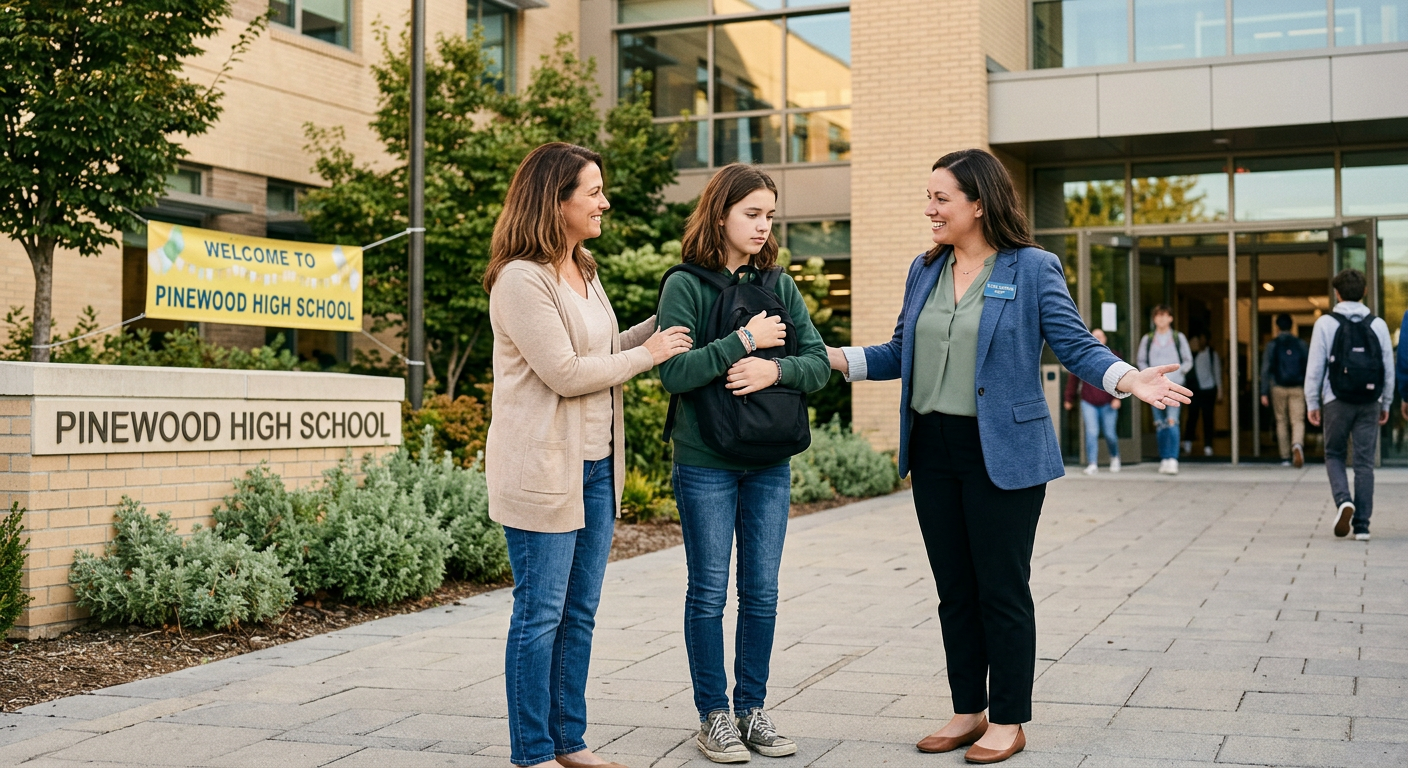
Common Reasons Teens Start Avoiding School
A teen who will not attend school may be trying to avoid a situation that feels unbearable, even if that situation is not obvious to adults. Looking beyond the behavior can help families respond more effectively.
Anxiety and Panic Symptoms
Anxiety can make a normal school day feel threatening. A teen may worry about being called on, taking a test, riding the bus, eating lunch alone, having a panic attack in class, or being separated from a parent.
Physical symptoms can be very real. The American Academy of Pediatrics notes that school avoidance can involve headaches, stomachaches, nausea, dizziness, or rapid breathing that occur most often on school days. A medical evaluation can help rule out physical illness while also considering emotional factors.
Depression or Significant Mood Changes
Depression in teenagers does not always look like sadness. It can appear as irritability, sleeping too much, withdrawing from friends, low motivation, hopeless statements, declining grades, or refusing activities that once mattered.
If your teen has stopped caring about school, friendships, sports, hobbies, or their future, it is worth taking seriously. A sudden change in school attendance paired with persistent mood or behavior changes may warrant a professional evaluation.
Bullying, Social Conflict, or Feeling Isolated
Many teens avoid school because of problems with peers. This might involve direct bullying, rumors, exclusion, cyberbullying, a breakup, friendship conflict, or a sense that they do not fit in socially.
Ask gentle, specific questions rather than only asking, “Why don’t you want to go?” You might try: “Is there a part of the day that feels hardest?” “Has anyone been bothering you online or at school?” or “Do you feel alone at lunch or between classes?” A teenager may share more when they feel they will not be blamed or pushed to give an immediate answer.
Academic Pressure, Learning Challenges, or Attention Difficulties
Avoidance sometimes begins when schoolwork becomes harder to manage. A teen with untreated attention problems may feel embarrassed about missing assignments, forgetfulness, poor test performance, or repeated criticism. A teen with a learning difference may be working much harder than classmates while still falling behind.
ADHD can affect organization, task initiation, working memory, and follow-through. It does not automatically explain school refusal, but attention-related struggles can contribute to a cycle of missed work, shame, conflict, and avoidance. Learn more about ADHD and attention difficulties in adolescents.
Autism Spectrum Differences and School Overload
For some teens, the noise, transitions, crowded hallways, social expectations, sensory demands, and unpredictability of school can become exhausting. A teen may appear fine until they reach a point of burnout or begin refusing to attend.
Autism spectrum disorder is only one possible explanation, and an evaluation can help clarify whether sensory, social, communication, executive-function, or emotional factors are affecting school attendance. Families can also explore autism spectrum support and evaluation when those concerns are relevant.
Signs Parents Should Watch For
School refusal often develops gradually. Parents may first notice increased tardiness, frequent nurse visits, missing certain classes, asking to stay home on test days, or conflict every Sunday evening.
Pay attention to patterns such as:
- Headaches, stomachaches, nausea, or panic symptoms before school
- Crying, anger, shutting down, or refusing to get out of bed on school mornings
- Avoiding specific classes, lunch, PE, bus rides, or social events
- Falling grades, incomplete work, or repeated disciplinary problems
- Sleeping much later, staying awake most of the night, or extreme morning fatigue
- Pulling away from friends, family activities, or favorite interests
- Strong fear of failure, perfectionism, or distress over missed assignments
- Statements of hopelessness, worthlessness, or not wanting to be alive
The U.S. Department of Education generally defines chronic absenteeism as missing 10% or more of school days, about 18 days in a typical school year. Attendance difficulties can become harder to reverse as absences accumulate, which is why early communication and support matter.
What Parents Can Do When a Teen Refuses School
Parents can be compassionate and firm at the same time. Your teen needs to know you take their distress seriously, while also understanding that a plan for school attendance is still important.
Start With a Calm Conversation
Choose a time that is not during a morning crisis. Let your teen know you want to understand, not lecture.
Try language such as:
- “I can see school feels really hard right now.”
- “You do not have to solve this alone.”
- “Help me understand what happens in your body or thoughts when it is time to leave.”
- “We will work on this together, but staying home cannot be the only plan.”
Avoid dismissing physical complaints or calling your teen dramatic. At the same time, avoid making home feel like a reward for missing school. Keep the day calm, supervised, and structured if your teen must stay home for a legitimate health or safety reason.
Contact the School Early
Reach out to a counselor, administrator, school psychologist, nurse, or trusted teacher. For families in Scottsdale and the greater Phoenix area, a collaborative conversation with your teen’s school can identify practical supports without assuming the school caused the problem.
Ask about options such as a gradual return plan, a morning check-in with a trusted adult, a quiet space for brief breaks, makeup-work priorities, counseling support, schedule adjustments, or consideration for a 504 Plan or IEP when appropriate. The AACAP school refusal resource notes that school-based supports may be part of a successful attendance plan for qualifying students.
Rebuild Attendance in Manageable Steps
For some teens, returning all at once may feel impossible. A clinician and school team may recommend a gradual, structured return based on the individual situation, such as arriving for one class, attending a preferred class, or checking in with a trusted staff member before the day starts.
The plan should not become open-ended avoidance. Small steps work best when they are consistent, tracked, and connected to the underlying problem, whether that is anxiety, bullying, depression, academic difficulty, or another concern.

When Professional Evaluation May Be Appropriate
A psychiatric or mental health evaluation may be helpful when school refusal lasts more than a week, becomes recurrent, leads to significant absences, or occurs with panic, depression, severe anxiety, aggression, substance use, self-harm, major sleep disruption, or a sharp decline in functioning.
An evaluation does not label a teen based on one behavior. It helps identify the factors that may be contributing, including emotional symptoms, attention concerns, developmental differences, medical issues, family stress, school demands, peer relationships, and past experiences.
At Holistic Psychiatry Scottsdale, Dr. Fariba Pfitzner provides child and adolescent psychiatric care for families who are trying to understand changes in attendance, mood, behavior, concentration, or social functioning. Care can include a thorough psychiatric evaluation, personalized treatment planning, coordination with other providers when appropriate, and medication management when clinically indicated.
If your teen talks about suicide, self-harm, harming someone else, or seems unable to stay safe, seek urgent help. Call or text 988 in the United States, call 911, or go to the nearest emergency department.
Questions Parents Often Ask About Teen School Refusal
Is my teenager refusing school because they are lazy?
Usually, it is more useful to ask what your teen may be avoiding or struggling to manage. Lack of motivation can be part of depression, anxiety, sleep deprivation, academic discouragement, social stress, attention difficulties, or conflict, so a closer look is often more productive than punishment alone.
Can anxiety make a teenager physically sick before school?
Yes. Anxiety can be associated with stomach pain, headaches, nausea, dizziness, shaking, rapid breathing, and other physical symptoms. Because medical conditions can cause similar symptoms, it is important to discuss persistent complaints with your teen’s healthcare professional.
What is the difference between school refusal and truancy?
School refusal usually involves distress, fear, or emotional difficulty about attending, often with a parent aware of the absence. Truancy more often involves skipping without parental knowledge and may have different underlying causes. Both situations deserve thoughtful assessment rather than assumptions.
Should I force my teen to go to school?
A firm expectation for attendance is important, but physical force, threats, and escalating arguments can worsen fear and conflict. A calm plan that involves your teen, the school, and qualified professionals is often safer and more sustainable.
Can ADHD cause a teenager to avoid school?
ADHD may contribute when a teen feels overwhelmed by missed assignments, disorganization, repeated correction, or poor academic performance. However, ADHD is not the only possible explanation, and an evaluation can help identify what is contributing.
Could bullying be the reason my teen will not attend school?
Yes. Bullying, social exclusion, harassment, and online conflict can all make school feel unsafe. Ask specific questions, document concerns, and communicate promptly with appropriate school staff while supporting your teen emotionally.
When should I consider seeing a child and adolescent psychiatrist?
Consider an evaluation when refusal persists, absences are adding up, school functioning has declined, or your teen has significant anxiety, mood changes, panic, behavioral changes, sleep problems, attention concerns, or safety concerns. A psychiatrist can help determine whether a mental health condition may be involved and what supports may fit your teen’s needs.
Take the Pattern Seriously, Without Assuming the Cause
A teenager refusing school is not a parenting failure, and it does not automatically point to one diagnosis. It is a meaningful change that calls for curiosity, steady support, clear expectations, and timely action.
The earlier families address repeated absences, the more opportunities there are to reduce conflict, protect relationships, and help a teen reconnect with learning, peers, and daily routines. Focus on understanding the barrier beneath the behavior, then build a plan that your teen can follow with support.
Help Your Teen Reconnect With School
If your child or teenager is struggling with school attendance, anxiety, mood changes, attention, behavior, friendships, or emotional challenges, you do not have to determine the cause on your own. Dr. Fariba Pfitzner provides child and adolescent psychiatric evaluation and individualized treatment for families in Scottsdale, Arizona. Schedule an appointment with Holistic Psychiatry Scottsdale to discuss the support that may be appropriate for your teen.
About Holistic Psychiatry Scottsdale
Holistic Psychiatry Scottsdale, led by Dr. Fariba Pfitzner, provides personalized psychiatric care for children, adolescents, teenagers, and young adults in Scottsdale, Arizona.
Dr. Pfitzner works with families experiencing concerns involving ADHD and attention difficulties, anxiety and stress disorders, depression and mood disorders, Autism Spectrum Disorder, behavioral and emotional challenges, and school and social difficulties.
Care is individualized to the needs of each child and family, with the goal of understanding the factors affecting emotional health, behavior, relationships, development, and school performance.
Areas We Help With
- ADHD & Attention Difficulties
- Anxiety & Stress Disorders
- Depression & Mood Disorders
- Autism Spectrum Disorder
- Behavioral & Emotional Challenges
- School & Social Difficulties
Concerned about your child or teenager? Contact Holistic Psychiatry Scottsdale to schedule an appointment with Dr. Fariba Pfitzner.