Why Is My Child Refusing to Go to School in Scottsdale?
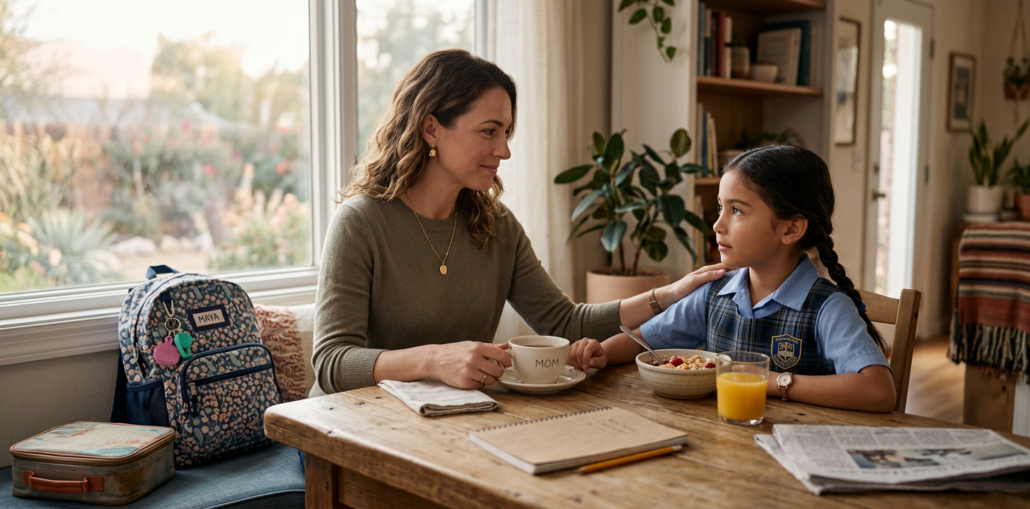
A difficult school morning can leave a parent feeling worried, frustrated, and unsure what to do next. When a child cries, complains of a stomachache, shuts down, or refuses to get in the car, the behavior may be communicating that something about school feels frightening, overwhelming, painful, or impossible to manage.
Why is my child refusing to go to school in Scottsdale? There is rarely one simple explanation. School refusal can be connected to anxiety, bullying, friendship problems, academic pressure, attention difficulties, low mood, sleep problems, a medical concern, or several stressors happening at the same time. It does not automatically mean a child is being defiant or has a psychiatric diagnosis.
The American Academy of Child and Adolescent Psychiatry estimates that school refusal affects about 1% to 5% of school-age children at some point, often around major transitions such as starting school or moving into middle school. Read AACAP’s family guidance on school refusal.
School Refusal Is a Pattern, Not a Diagnosis
School refusal is a pattern of intense difficulty getting to school, entering the building, remaining for the day, or attending consistently. Understanding what is driving the avoidance is more useful than assuming the child is simply choosing not to cooperate.
A child who is avoiding school may genuinely want to attend but feel unable to face a particular fear, demand, social situation, or physical sensation. Some children settle once they arrive. Others become more distressed as the school day gets closer or ask to leave soon after arrival.
School refusal is also different from truancy. Parents are usually aware that their child is not attending, and the child often shows distress, fear, panic, physical complaints, shame, or emotional exhaustion around school.
Signs that school may be feeling too hard
Parents may notice a pattern before a child fully stops attending. Watch for changes that happen on school nights, Sunday evenings, weekday mornings, or before specific classes and activities.
- Crying, anger, panic, freezing, or hiding before school
- Frequent headaches, nausea, stomach pain, shakiness, or requests to see the nurse
- Trouble sleeping, nightmares, or needing extra reassurance at night
- Fear of the bus, cafeteria, bathroom, locker room, recess, or a particular class
- Sudden perfectionism, distress over incomplete work, or fear of making mistakes
- More conflict at home about homework, getting dressed, or leaving on time
- Changes in friendships, isolation, irritability, or loss of interest in usual activities
- A sharp drop in grades, missed assignments, or disciplinary concerns
Physical symptoms should be taken seriously. A pediatrician can help rule out medical causes, while a mental health evaluation may help clarify whether emotional, social, developmental, academic, or behavioral concerns are contributing.

What May Be Behind Your Child’s Refusal to Go to School
Children can refuse school for very different reasons, even when their behavior looks similar from the outside. Looking for patterns can help parents and school staff respond more thoughtfully.
Anxiety and separation worries
Anxiety is one of the most common reasons school can begin to feel unbearable. A younger child may worry that something bad will happen to a parent while they are apart. An older child may fear tests, presentations, crowded hallways, social judgment, being late, or having a panic attack at school.
Anxiety does not always sound like “I’m scared.” It may look like stomach pain, tears, irritability, anger, repeated reassurance-seeking, or a strong insistence on staying home. Our page on anxiety and stress disorders in children and teens explains how anxiety can affect school, relationships, and daily routines.
Friendship stress, bullying, or feeling unsafe
A child may not tell a parent directly that they feel left out, teased, humiliated, threatened, or unsafe. Instead, they may say they hate school, ask to change schools, complain about feeling sick, or suddenly want to avoid the bus or lunch period.
Ask calm, specific questions about the parts of the day that can be difficult to explain. Consider the bus ride, recess, lunch, group chats, bathrooms, sports, changing classes, and interactions with particular peers. If your child attends a Scottsdale Unified School District school, a conversation with the teacher, counselor, or administrator may help identify changes that are not visible at home.
Academic pressure, ADHD, or learning challenges
For some children, refusing school is connected to feeling behind, embarrassed, distracted, or unable to keep up. A student who regularly loses materials, forgets assignments, struggles to start work, or receives repeated corrections may begin to associate school with failure or shame.
ADHD can affect focus, organization, working memory, emotional regulation, and task completion. However, anxiety, depression, learning differences, poor sleep, and classroom stress can create similar difficulties. ADHD and attention difficulties are worth exploring when school refusal occurs alongside persistent concentration or organization problems, but an evaluation can help distinguish overlapping causes.
Low mood, depression, or emotional exhaustion
A child or teen who once enjoyed school but no longer wants to get out of bed, see friends, participate in activities, or complete work may be experiencing more than a temporary lack of motivation. Depression in young people can appear as irritability, withdrawal, hopelessness, low energy, sleep changes, or a decline in academic engagement.
School refusal alone does not establish depression. Still, parents should pay attention when avoidance comes with sadness, isolation, major changes in eating or sleeping, a loss of interest, or negative statements about themselves. Learn more about depression and mood concerns in young people.
Sensory overload, autism-related differences, or difficult transitions
Busy classrooms, loud cafeterias, unexpected schedule changes, social demands, and crowded hallways can be especially draining for some children. A child may have difficulty describing sensory discomfort or social confusion, particularly if they have spent a long time trying to cope quietly.
Autism Spectrum Disorder is only one possible consideration, and avoiding school does not mean a child is autistic. Still, sensory sensitivities, rigid routines, social communication differences, or intense distress during transitions can be useful details to share with a qualified professional.
If This Is Day Five of School Refusal, Focus on Patterns and Partnership
By the fifth day of repeated school refusal, most families are exhausted and tempted to rely on threats, lengthy negotiations, or last-minute decisions. A calmer approach is usually more productive: gather information, make attendance a shared goal, and build a consistent plan with the right people.
Start a brief daily log for one school week. Write down when the distress begins, what your child says, physical symptoms, sleep, the class or activity they are avoiding, what happens after they stay home, and what helps even a little. This information can reveal whether the main trigger is separation, a particular peer, schoolwork, mornings, transitions, or something else.
Steps parents can take this week
- Choose a calm time to talk, rather than trying to solve everything during a rushed morning.
- Ask specific questions: “What is the hardest part of the day?” or “When do you start feeling worried?”
- Contact the school early and ask what teachers or staff are observing.
- Request practical support, such as meeting a trusted adult at arrival, a quieter entry point, a check-in plan, or help prioritizing missed work.
- Keep mornings predictable by preparing clothes, food, transportation, and materials the night before.
- Avoid shaming language. Clear expectations matter, but so does helping your child feel understood.
- Involve your child’s pediatrician when physical symptoms are frequent, severe, or new.
The U.S. Department of Education generally defines chronic absenteeism as missing at least 10% of school days, or roughly 18 days in a school year, for any reason. That is why it is helpful to address a growing attendance problem before missed days become a longer-term pattern. Learn more from the U.S. Department of Education.
When a Child Psychiatric Evaluation May Help
Professional evaluation may be appropriate when school refusal is recurring, worsening, disrupting family life, or happening alongside panic, severe outbursts, withdrawal, persistent physical complaints, falling grades, social isolation, or major changes in mood or behavior.
A child and adolescent psychiatrist can consider the full picture, including development, emotional health, sleep, medical history, school demands, relationships, family stress, attention concerns, and current symptoms. The goal is not to rush toward a label or assume medication is needed. It is to understand why school feels difficult and develop individualized recommendations.
At Holistic Psychiatry Scottsdale, Dr. Fariba Pfitzner provides family-centered psychiatric evaluation for children, adolescents, and young adults. When clinically appropriate, recommendations may include therapy coordination, parent guidance, school collaboration, personalized treatment planning, and medication management.
If your child talks about self-harm, suicide, wanting to die, or harming someone else, seek urgent help through emergency services, the nearest emergency department, or call or text 988 in the United States.
Questions Parents Ask About School Refusal
Should I make my child go to school if they are crying?
There is no single answer for every child or every morning. Keep school attendance as an important goal, assess for safety and medical concerns, work with the school, and seek professional guidance when distress is intense, repeated, or escalating.
Can anxiety cause stomachaches before school?
Yes. Anxiety can cause real nausea, stomach pain, headaches, shakiness, and fatigue. Because these symptoms can also have medical causes, involve your child’s pediatrician when they are frequent or concerning.
Is school refusal the same as being defiant?
Not necessarily. A child may look oppositional when they are actually scared, overwhelmed, ashamed, socially stressed, or unable to explain what feels wrong. Boundaries still matter, but the reason behind the behavior matters too.
Could ADHD make my child refuse school?
ADHD can contribute when missed work, disorganization, repeated correction, or difficulty keeping up makes school feel discouraging. It is not the only possible explanation, so a comprehensive assessment can help clarify the pattern.
Can a 504 Plan or IEP help a child who avoids school?
It may help if a student qualifies and needs accommodations or specialized educational support. Parents can discuss concerns with the school because eligibility and available services depend on the child’s individual needs and the school’s evaluation process.
What if my teenager refuses school but will not tell me why?
Teens may feel embarrassed, worried about consequences, or unable to put their experience into words. Start with calm, concrete questions and involve a trusted school professional or qualified clinician if the pattern continues.
How long should I wait before getting help?
You do not need to wait until the problem becomes overwhelming. It is reasonable to ask for support when refusal recurs, absences accumulate, family conflict is increasing, or your child’s emotional well-being is declining.
A Clearer Plan Can Start With One Conversation
School refusal can make families feel isolated, but it is often important information about a child’s experience, not proof that a parent has failed. Compassion, steady expectations, school partnership, and an individualized understanding of the problem can help replace daily conflict with a more workable path forward.
The most helpful question is often not, “How do we make this stop?” It is, “What is making school feel so hard for my child, and what support could help?”
Talk With a Scottsdale Child and Adolescent Psychiatrist
If your child or teenager is struggling with school attendance, anxiety, friendships, attention, mood, behavior, or emotional distress, you do not have to determine the cause on your own. Dr. Fariba Pfitzner provides child and adolescent psychiatric evaluation and treatment for families in Scottsdale, Arizona. Schedule an appointment with Holistic Psychiatry Scottsdale to discuss the concerns affecting your child and family.

About Holistic Psychiatry Scottsdale
Holistic Psychiatry Scottsdale, led by Dr. Fariba Pfitzner, provides personalized psychiatric care for children, adolescents, teenagers, and young adults in Scottsdale, Arizona.
Dr. Pfitzner works with families experiencing concerns involving ADHD and attention difficulties, anxiety and stress disorders, depression and mood disorders, Autism Spectrum Disorder, behavioral and emotional challenges, and school and social difficulties.
Care is individualized to the needs of each child and family, with the goal of understanding the factors affecting emotional health, behavior, relationships, development, and school performance.
Areas We Help With
- ADHD & Attention Difficulties
- Anxiety & Stress Disorders
- Depression & Mood Disorders
- Autism Spectrum Disorder
- Behavioral & Emotional Challenges
- School & Social Difficulties
Concerned about your child or teenager? Contact Holistic Psychiatry Scottsdale to schedule an appointment with Dr. Fariba Pfitzner.