My Child Keeps Getting in Trouble at School: When to Seek Help

A call from the teacher, another disciplinary note, or a suspension can leave parents feeling frustrated, embarrassed, and deeply worried. When your child keeps getting in trouble at school, it is easy to focus only on the behavior. But repeated fighting, defiance, emotional outbursts, or refusal to follow directions can be a sign that your child is struggling with something bigger.
We encourage parents to take persistent school behavior problems seriously without jumping to conclusions. My child keeps getting in trouble at school is often a question about what is happening beneath the surface, not simply how to make a child behave better. A thoughtful evaluation can help identify the emotional, developmental, social, academic, or attention-related factors that may be contributing.
When School Trouble May Be a Sign Your Child Needs More Support
Every child has a difficult day. Children may argue, make impulsive choices, test limits, or react poorly when they feel tired, hungry, overwhelmed, or disappointed. The concern grows when the same patterns happen repeatedly, become more intense, or interfere with learning, friendships, family life, or safety.
The American Academy of Child and Adolescent Psychiatry advises parents to seek help when emotional or behavioral concerns persist, worsen, or are also noticed by teachers and other adults in a child’s life. Their guidance on when to seek help for your child can be a useful starting point.
Consider professional support when you see patterns such as:
- Frequent referrals, detentions, suspensions, or removals from class
- Physical fights, threats, aggression, or destroying property
- Intense anger that seems disproportionate to the situation
- Ongoing defiance with teachers or other adults
- Sudden drops in grades, missed assignments, or inability to complete work
- Difficulty making friends, repeated conflict with peers, or social isolation
- Trouble concentrating, sitting still, waiting, or controlling impulses
- Tearfulness, withdrawal, irritability, hopelessness, or major mood changes
- School refusal, fear of school, or complaints of stomachaches before school
- Behavior problems at both school and home
A single incident does not tell us everything. A pattern does.
Why Children Keep Getting in Trouble at School
Repeated discipline problems do not automatically mean a child has a mental health condition. However, behavior can be a child’s way of showing stress, frustration, fear, confusion, or difficulty managing emotions. We look at the full picture, including what happens before the behavior, where it occurs, how adults respond, and whether the same struggles appear at home or in other settings.
ADHD And Impulsivity
Children with ADHD may know classroom rules but struggle to pause before acting. They may blurt out answers, interrupt, leave their seat, forget directions, lose work, react quickly during conflict, or become frustrated when tasks require sustained attention.
ADHD can also affect emotional regulation. A child who feels corrected all day may become more reactive, argumentative, or discouraged over time. Learn more about ADHD and attention difficulties in children and teens and how an evaluation can clarify whether attention, executive functioning, or impulsivity may be involved.
Anxiety, Stress, Or Bullying
An anxious child does not always look quiet or fearful. Anxiety can sometimes show up as irritability, avoidance, arguing, perfectionism, shutting down, or angry outbursts. A student who feels unsafe socially, worries about being embarrassed, or is being bullied may react strongly to ordinary classroom situations.
Ask gentle, open-ended questions rather than only asking, “Why did you get in trouble?” Try questions like:
- “What was happening right before things got hard?”
- “Did something happen with another student?”
- “What part of the day feels the most stressful?”
- “What would make school feel safer or easier tomorrow?”
Mood Changes And Emotional Overload
Children and teenagers who are depressed, overwhelmed, grieving, or emotionally exhausted may become more irritable, oppositional, or disconnected. A teenager who used to manage school well but is suddenly failing classes, fighting with friends, sleeping differently, or losing interest in activities may need closer attention.
The Centers for Disease Control and Prevention has reported that physical fighting on school property can be linked with broader safety and well-being concerns for students. That does not mean every child who fights has a psychiatric condition. It does mean repeated aggression deserves a compassionate, careful response rather than dismissal. Read more from the CDC on school violence and youth safety.
Social, Learning, Or Developmental Differences
Some children act out because they do not understand an assignment, cannot keep up with transitions, misread social cues, or feel overwhelmed by noise, crowds, or unexpected changes. Children with learning challenges, autism spectrum differences, communication difficulties, or social stress can be misunderstood as defiant when they are actually struggling to cope.
That is why we recommend looking beyond the disciplinary report. The question is not only, “What rule was broken?” It is also, “What skill, support, or understanding might be missing?”
What Parents Can Do Before The Next School Call
You cannot solve every school problem in one conversation, but you can create a clearer path forward. Start by gathering information and focusing on patterns instead of labels.
Ask The School For Specific Details
Request examples of what happened before, during, and after the behavior. Useful details include the time of day, subject, setting, peers involved, adult responses, and whether the behavior occurs during unstructured times such as lunch, recess, passing periods, or group work.
You might ask:
- What usually happens immediately before my child becomes upset?
- Are there particular classes, assignments, peers, or transitions involved?
- What helps my child calm down or rejoin the activity?
- Has the behavior changed recently?
- Are there academic concerns along with the disciplinary issues?
- Is my child having difficulty with friendships or being bullied?
A collaborative conversation is usually more productive than approaching the school as an adversary. Your child benefits when parents, teachers, counselors, and healthcare professionals can share observations respectfully.
Talk With Your Child When Everyone Is Calm
After a stressful school day, your child may not be ready to explain what happened. Give them time to decompress. Later, use a calm tone and show curiosity instead of rushing toward consequences.
You can still set clear limits around aggression, disrespect, and unsafe behavior. At the same time, let your child know that you want to understand what made the situation difficult. Children are more likely to share honestly when they believe they will be heard.
Track Patterns For Two To Three Weeks
Keep brief notes about sleep, appetite, homework, mood, conflicts, school messages, and major changes at home. Notice whether outbursts happen after poor sleep, difficult assignments, social conflict, overstimulating environments, or transitions.
This information can help you and your child’s care team see connections that are easy to miss in the moment. It can also help distinguish an isolated rough patch from a more persistent concern.
When To Seek Professional Help Right Away
Some situations should not wait for the next parent-teacher conference. Seek prompt professional guidance if your child is repeatedly aggressive, has made threats, is being harmed or bullied, is refusing school for an extended period, or is showing significant sadness, withdrawal, panic, or loss of functioning.
Get urgent help through emergency services or the nearest emergency department if your child talks about wanting to die, self-harm, harming someone else, has a plan to do so, or cannot be kept safe. In a crisis, immediate safety comes first.
For ongoing concerns, a child and adolescent psychiatric evaluation can help assess the many factors that may be affecting behavior. This may include attention and impulse control, anxiety, mood, developmental history, family stress, sleep, learning concerns, friendships, and school environment.
How A Child Psychiatrist Can Help
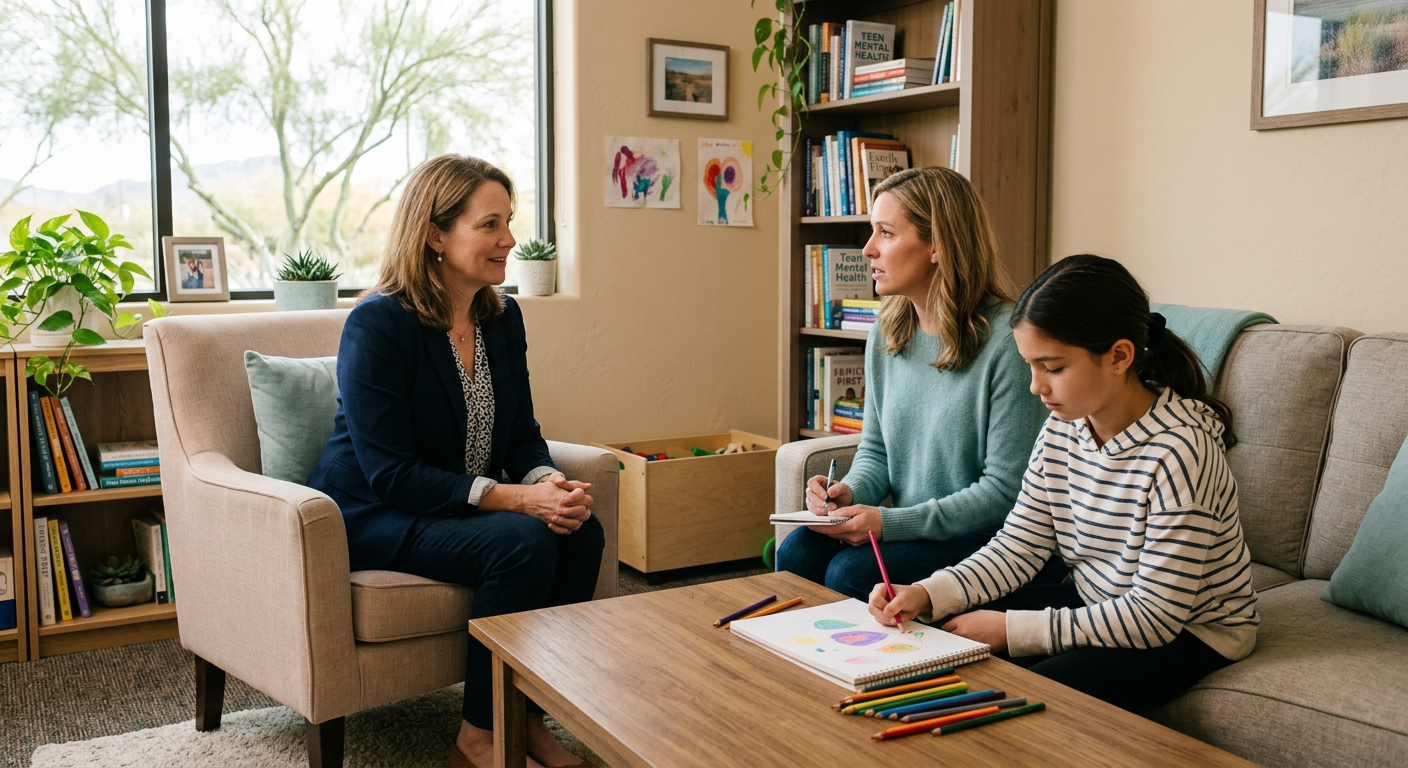
A psychiatric evaluation is not about labeling your child as “bad” or blaming parents. It is a structured way to understand what is contributing to the behavior and what type of support may be appropriate.
At Holistic Psychiatry Scottsdale, Dr. Fariba Pfitzner takes a personalized, family-centered approach with children, teens, and young adults. For Scottsdale families dealing with fighting, defiance, intense outbursts, attention concerns, or declining school performance, care may include a thorough assessment, treatment planning, coordination with other professionals when appropriate, and medication management when clinically appropriate.
Families can also explore support for behavioral and emotional challenges and school and social difficulties. The goal is not to promise a quick fix. It is to better understand your child’s needs and build a practical plan that supports emotional health, behavior, relationships, and school functioning.
Frequently Asked Questions
Is It Normal For My Child To Get In Trouble At School Sometimes?
Yes. Occasional mistakes, conflicts, and poor choices are part of growing up. We become more concerned when the behavior is frequent, escalating, unsafe, or affecting your child’s learning, friendships, confidence, or family life.
Can ADHD Cause A Child To Fight Or Be Defiant At School?
ADHD can contribute to impulsivity, difficulty waiting, frustration, and rapid emotional reactions. However, fighting or defiance can have many possible causes, so a professional evaluation can help determine whether ADHD, anxiety, social stress, mood concerns, or another factor may be involved.
What If My Child Behaves Well At Home But Not At School?
That difference can offer important clues. School places different demands on children, including academic pressure, peer interactions, noise, transitions, and long periods of structured attention. Talking with teachers and gathering specific examples can help clarify what is difficult.
Could Anxiety Make My Child Act Angry Or Oppositional?
Yes. Children do not always express anxiety by saying they are worried. Some become irritable, argumentative, avoidant, perfectionistic, or emotionally overwhelmed. Anxiety is only one possible explanation, but it is worth discussing when behavior changes are paired with fear, avoidance, physical complaints, or excessive worry.
When Should I Be Concerned About School Fights?
Take any physical fight seriously, especially if fights are repeated, cause injury, involve threats or weapons, or occur alongside bullying, major mood changes, or escalating anger. Your child may need support with safety, conflict management, emotional regulation, peer problems, or another underlying concern.
Does A Psychiatric Evaluation Mean My Child Will Need Medication?
No. An evaluation is meant to understand your child’s individual needs. Recommendations may include parent guidance, school coordination, therapy referrals, behavioral strategies, further testing, lifestyle supports, medication management, or a combination of approaches when appropriate.
Take The Next Step With Support
If your child or teen is struggling with repeated school trouble, you do not have to figure out the cause alone. Schedule an appointment with Holistic Psychiatry Scottsdale to discuss a compassionate psychiatric evaluation with Dr. Fariba Pfitzner in Scottsdale, Arizona.
The Bottom Line
Repeated school discipline problems can be exhausting for the entire family, but they are also a reason to pause and look deeper. Fighting, defiance, emotional outbursts, and classroom disruption may reflect unmet needs involving attention, stress, mood, peer conflict, learning, or emotional regulation.
The most helpful next step is usually not harsher punishment alone. It is a clearer understanding of what your child is experiencing, consistent support at home and school, and professional guidance when the problem is persistent or affecting daily life.
About Holistic Psychiatry Scottsdale
Holistic Psychiatry Scottsdale, led by Dr. Fariba Pfitzner, provides personalized psychiatric care for children, adolescents, teenagers, and young adults in Scottsdale, Arizona.
Dr. Pfitzner works with families experiencing concerns involving ADHD and attention difficulties, anxiety and stress disorders, depression and mood disorders, autism spectrum disorder, behavioral and emotional challenges, and school and social difficulties.
Care is individualized to the needs of each child and family, with the goal of understanding factors affecting emotional health, behavior, relationships, development, and school performance.
Areas We Help With
- ADHD and attention difficulties
- Anxiety and stress disorders
- Depression and mood disorders
- Autism spectrum disorder
- Behavioral and emotional challenges
- School and social difficulties
Concerned about your child or teenager? Contact Holistic Psychiatry Scottsdale to schedule an appointment with Dr. Fariba Pfitzner.